

How To Choose The Right Roofing Material For Your Home
- Home & Garden
- 21 January 2026
Key Takeaways:
- Assess your local climate to select materials that are suited to the weather conditions.
- Consider the longevity and maintenance requirements of different roofing options.
- Evaluate the aesthetic compatibility of roofing materials with your home’s architecture.
- Balance your budget by considering both the initial costs and the long-term benefits of roofing materials.
Choosing the right roofing material for your home is a significant decision, influencing everything from your home’s curb appeal to its energy efficiency and ability to withstand the elements. A knowledgeable roofer can be an invaluable asset during the selection process, but understanding the essentials yourself is vital to making the best decision for your household.
The variety of options on the market means homeowners must consider several factors, such as budget, climate, and desired maintenance level. Quality roofing not only boosts home value but also safeguards your family’s comfort for decades. By weighing the strengths and drawbacks of available materials, you can make a well-informed choice suited to your unique needs and your home’s style.
Along with structural protection, the right roof can enhance the overall appearance of your house, build resilience against changing weather conditions, and even help keep cooling costs manageable in both hot and cold climates. It’s also important to consider the long-term implications—will the material age gracefully or require frequent repairs? Your priorities and local conditions will shape the best solution.
If your focus is on longevity and minimal upkeep, or if you’re seeking a high-end look on a budget, matching your preferences to available technologies will ensure satisfaction for years to come.
Factors To Consider When Choosing Roofing Materials
Climate & Weather Conditions
The region where you reside plays a significant role in narrowing down roofing options. When considering residential roofing, evaluating local climate conditions is crucial for selecting materials that will effectively withstand weather challenges. For instance, metal roofs are particularly advantageous in areas with heavy snowfall or consistent rain, offering both durability and resistance to cracking from freeze-thaw cycles. In hurricane- or hail-prone regions, materials with high wind and impact ratings are essential. Understanding how the weather can impact roofing over time will help you maximize the return on your investment.
Durability & Longevity
When it comes to roofing, not all materials are created equal in terms of lifespan. While asphalt shingles may be adequate for those planning to move within 20 to 30 years, homeowners seeking a longer-term solution often opt for more durable materials, such as metal or slate. Slate in particular can last for more than a century with minimal care, making it a favorite for historic and luxury residences.
Energy Efficiency
Energy conservation is a major consideration for modern homeowners. Roofing materials like metal or light-colored tiles not only reflect sunlight to reduce heat absorption but can also help lower cooling bills. Innovations in asphalt shingles and synthetic roofing have incorporated energy-saving coatings and features, making them viable options for those who prioritize both affordability and efficiency.
Aesthetic Appeal
The roofing you choose will make a significant visual impact, so it’s critical to find an option that complements your home’s style and color palette. Traditional asphalt shingles offer versatility, while clay and concrete tiles can transform the appearance of homes inspired by Mediterranean or Spanish architecture. Modern synthetic materials also replicate the appearance of natural wood or stone without the need for upkeep.
Budget Considerations
Your available budget will ultimately guide your final selection. Asphalt shingles remain the go-to for cost-conscious homeowners, providing solid performance at a fraction of the cost of premium alternatives. Wood shakes, although budget-friendly upfront, may prove more costly over time due to ongoing maintenance. Tile, slate, and metal have higher installation costs but reward that investment with longer service lives and added property value.
Popular Roofing Materials & Their Pros & Cons
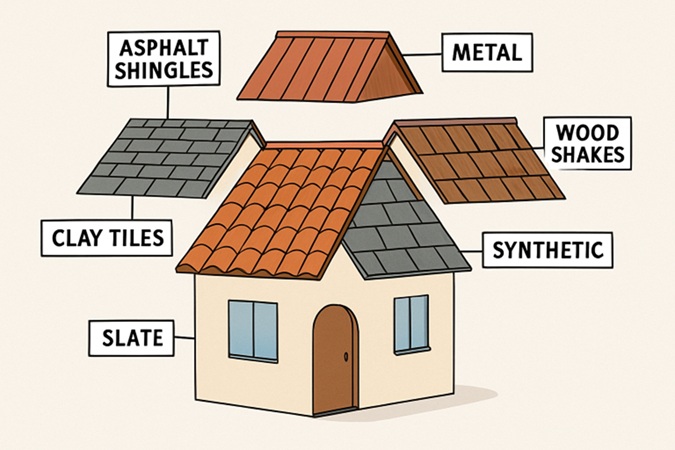
Asphalt Shingles
- Pros: Affordable, easy to install, and available in a variety of styles and colors. Performs well on a range of roof slopes.
- Cons: Shorter lifespan (20-30 years) and can be vulnerable to severe weather like hail or strong winds.
Metal Roofing
- Pros: Extremely durable (40-70 years), energy efficient, low maintenance, and fire-resistant. Suitable for both traditional and contemporary homes.
- Cons: More expensive initially, and may be noisier during storms unless additional insulation is installed.
Wood Shakes & Shingles
- Pros: Offers a unique, rustic charm and good insulation properties, making it ideal for certain architectural styles.
- Cons: Requires frequent maintenance and is more susceptible to fire, insects, and mold. Not recommended in fire-prone regions.
Slate
- Pros: Renowned for longevity (over 100 years), minimal upkeep, and natural beauty. Also fire-resistant.
- Cons: Expensive to install and very heavy, requiring enhanced roofing support.
Clay & Concrete Tiles
- Pros: Excel in hot climates; long-lasting and highly fire-resistant. Their distinctive appearance suits Mediterranean and Spanish designs.
- Cons: Installation cost is high, they’re heavy, and they can break under impact, which can make repairs challenging.
Synthetic Roofing Materials
- Pros: Lightweight, designed to mimic higher-end materials, and more affordable. Quality varieties can offer impressive durability and performance.
- Cons: Quality and longevity vary significantly among manufacturers, so be sure to research thoroughly before committing.
Final Thoughts
Choosing the right roofing material means striking a balance among function, style, and cost. Weigh local climatic challenges, the required aesthetic, maintenance expectations, budget, and the long-term impact on your home’s comfort and value. With the right approach and expert guidance, the perfect roofing upgrade will shelter your family for many years and enhance curb appeal and market value.


